Tuesday, July 28, 2015

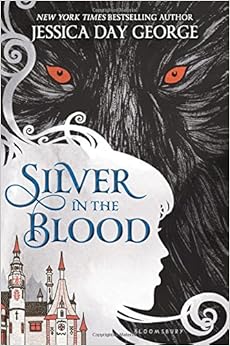
Silver in the Blood. Rating: Satisfactory.

"Night was falling, and Lou was losing herself."

Here is a list of things I lost when I began my flight:

My house on the hill, with the yellow door and the blue mailbox.
My black-and-white cat, Mr. Buble (no relation).
My red trenchcoat (too distinctive for my purposes).
My brother, Edgar, who will someday wake up from his coma to the news that I am in the wind.
My reading nook.
My comfortable chair.
My teacup collection.
My real name.

So you will not be surprised to know that I sometimes enjoy taking a break from the hard things. Some days, it's nice to read a book that is not about the horrible dark places we go. Some days, I just want to read a book in which good things happen to nice people; in which pretty girls wear pretty dresses. And also in which some people are wolves.

It's not too much to ask, is it, reader?

Silver in the Blood by the winsome Jessica Day George...

... delivers a delightful rest. Jessica Day George crafts a world of lace and corsets and ribbons and beaux and shapeshifters. Silver in the Blood is a feathery fantasy novel, filled with lovely, diverting descriptions of clothes and hair and fripperies. Our two main characters, Dacia and Lou, are sweet, strong women who sit beautifully within the filigreed society world built buy Ms. George. They are the platonic ideal of society girls, deeply concerned with decorum and appearances (but still quite clever). Both fall slightly out of their assigned social roles: Dacia is a little rebellious, while Lou is a little shy. That said, neither girl really looms as an anachronistic postmodern-feminist-in-Late-Victorian-clothing.

The plot is delightful: these two Late-Victorian society girls discover that they are part of a family of shapeshifters. What follows can easily be described as a "romp through 1890's-Romanian-werewolf society." There are stuffy aunts, and domineering grandmothers, and darkly brooding beaux, and blonde, well-meaning beaux. It is just-plain-fun. The secondary characters in the book are slightly underdeveloped, and I care not one bit. I did not find myself needing to know any of the details of Aunt Kate's mysterious love interest - it was more than enough for me to know that Lou and Dacia were scandalized by him, and then, we moved on. I did not care about the romantic interests - what I wanted to see was Lou and Dacia whispering to each other about those romantic interests. And I got what I wanted.

This touches on something that was intrinsic to my enjoyment of Silver in the Blood: the theme of Strong Female Characters Supporting Each Other. Lou and Dacia are cousins, and they are best friends, and that never changes. They trust each other, and confide in each other, and support each other, and their relationship is absolutely lovely. At the end of the book, loose romantic ends are tied up, and here is what delighted me, reader: the final scene of the book is not a steamy, romantic kiss with a man who has finally become a husband. Instead, it's the cousins, being excited for each other's happiness.

Now, for Spoilers.

You will be in no way surprised by any of this book, reader. I was so relieved to discover this: those who seem to be villains are villains, and those who seem to be heroes are heroes. Silver in the Blood is perfectly uncomplicated, as it should be. I would have been terribly disappointed had Jessica Day George attempted to shoehorn in a complex plot twist where none is needed; she did not let me down.

But, if you must have a spoiler, here's what I'll give you: Lou finds her strength. She is something that nobody thought she could be - the Smoke, a long-lost type of shapeshifter - and she goes from being a shy, wilted girl to being a strong, confident young woman. She doesn't surpass the brassier Dacia, but instead continues to complement her as they work towards an understanding of what it means to be shapeshiftresses in Late-Victorian Europe.

My hat goes off to Jessica Day George for Silver In the Blood. It was exactly what I hoped it would be - an airy-but-not-frivolous adventure for two young women in Parisian gowns.

Rating: Satisfactory. 

Possible ratings: Magnificent, Divine, Satisfactory, Tiresome, Lamentable, Execrable. This is a blog about words, what rating system did you expect?

Tuesday, July 21, 2015

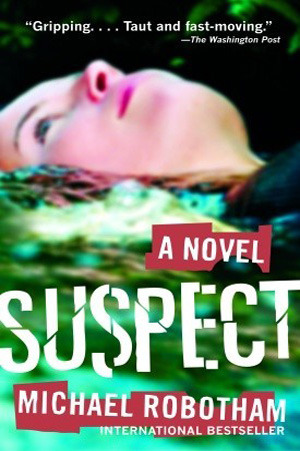
The Suspect. Rating: Lamentable.


"You know its going to be a bad day when you are having a prostate examination and you feel both of your doctor's hands on your shoulders!"

477362Reader, exciting news! Did you know that Agent Hawthorne has hired a psychologist to profile me? Of course you don't. Unless you're Agent Hawthorne, or the psychologist, or the person who approves Hawthorne's expenses. If you are any of those people, then please do drop me a line - I'd love to know what you're reading these days.

The psychologist (hello, Amy!) is a lovely woman, and very smart, and I have no doubt that she'll have me all figured out in a tick. As an homage to her hard work, I decided to read a book about a psychologist who winds up working with the police. Don't worry, though, Amy - I'm sure that your shared profession is where your resemblance to the protagonist ends, otherwise Hawthorne would never have hired you.

Oh, and nothing personal, Amy - but don't expect to catch me. That's how most of these books end, but you and I are not fictional characters, and we will probably never meet. Hope that's okay.

The Suspect by the capricious Michael Robotham...

...verged on being a good book, but then, it wasn't. 

The main character, Joseph O'Loughlin, is a psychologist who winds up being asked to assist in a murder investigation. Of course, he winds up getting pulled in way over his head, his life is at risk, yadda yadda, you know the drill with these ones. The thing/other thing in this particular story: O'Loughlin has recently been diagnosed with Parkinson's, and is struggling to cope with his diagnosis. This sounded to me like it would end up being a satisfactory read - overall, bog-standard, but with perhaps some added color; I do love a nuanced main character, as you well know. I had moderately high hopes.

Alas.

Joseph O'Loughlin is a stock character. He is a psychologist who is helping to investigate a crime - we all know how that plays out. The reader is treated to a straightforward 'should I try to help the person I suspect or should I just turn them in,' 'Oh dear, this is bigger than I thought,' 'O Woe Betide the Hubris of the Psychologist' narrative. This is nothing new, reader. It's boring, and I'm not going to talk about it any more. Instead, I'm going to talk about the women of The Suspect, because they are the thing that made this go from an average book to a below-average book.

I am not one to bandy about "this book hates women." Many books neglect the development of their female characters; some of them go so far as to affront the very nature of women in literature. An underdeveloped female character will not ruin a book for me - although I cannot immediately think of a book I've enjoyed in which the female characters were left to flounder in shallow narrative waters. Here is what will ruin a book for me, reader: women as decoration, obstacle, and spectacle.

All of these assessments will go from top to toes, so I'm putting them in the spoilers. If you're stopping here because you don't want the book spoiled, I'll leave you with this: if you're looking for a good crime novel, read something else.

Now, for Spoilers.

Here are the female characters: Sainted Wife, Broken Prostitute, Dead Nurse, Abusive Promiscuous Mother. I'm not going to include analyses of Vague Former Colleague, Organized Secretary, or Age-Ambiguous Daughter, because they are so underdeveloped that there is nothing for me to grab hold of - I have literally included everything about them in their titles.

Sainted Wife: O'Loughlin's wife is described as beautiful, intelligent, charitable, vivacious, and generally lovely. The narrator goes out of his way to repeatedly draw our attention to how essentially perfect she is. Her biggest flaw: not giving her husband enough sex, because she wants a baby, and is closely tracking her cycle in an attempt to maximize the efficacy of his sperm. When shit goes pear-shaped and O'Loughlin is suspected of murder, she finds out that he had sex with Broken Prostitute, and responds with appropriate outrage. Later, when he is vindicated of the murder charge, she turns out to be pregnant and decides to forgive and reconcile with O'Loughlin. The fact that he had sex with Broken Prostitute, sans condom, and then had sex with Sainted Wife, also sans condom, is brought up during the initial confrontation and then is never mentioned again. The high stakes ("Do you know how long I have to wait before I can get tested for AIDS? Three months.") evaporate, because no reason. She is domestic, child-focused, and yielding.

Dead Nurse: The kickoff to the murder investigation is the discovery of a body: the body of a nurse, who has been killed by oodles of torturous stab wounds. We discover, through the course of the book, that O'Loughlin knew her - he had treated her for self-harm. His treatment of her included sending her home with fresh scalpel blades to ensure that she would use clean ones (remember, Amy, I think you're much smarter than him). We also discover that she had attempted to seduce him, and, when rebuffed, she had fabricated a rape accusation against him. She is unstable, manipulative, and (of course) hot for the main character.

Abusive Promiscuous Mother: This is the biggest spoiler in this review, so feel free to skip it if you're worried about that. This character is the mother of the murderer(s). At the end of the book, here's what we've learned about her. (a) She falsely accused her husband of sexually abusing her son, because she wanted a divorce and for some unexplained reason did not just divorce him. (b) She had sex with... everyone. Everyone in the world. (c) She took her son and stepson to watch her participate in orgies ("She was laid out on the table like a smorgasbord. Naked. There were dozens of hands on her. Anyone could do anything they wanted. She had enough for all of them. Pain. Pleasure. It was all the same to her"). And, last but certainly not least - (d) She forced her son and stepson to participate in the orgies themselves. She tries to have sex with O'Loughlin on her deathbed; then, cancer kills her, and the reader is meant to understand that death is the least she deserves. She is the worst kind of Oedipal nightmare; a perversion of everything a mother and a woman should be.

Broken Prostitute: This character is the one that most clearly highlighted this book's hatred for women. She only contributes to the plot in that O'Loughlin has sex with her. The description of this, by the way, gives her about as much agency as a slick palm, and in no way acknowledges the power dynamic between a psychologist and the woman who he treated when she was a fifteen-year-old-prostitute.
While this is her only participation in the plot of the book - 'person who main character sleeps with because he's sad about his Parkinson's' - she gets a high wordcount. Why do you suppose she gets space on the page, reader? You should be able to guess this by now.
Yes, indeed, it's the thing you were hoping it wouldn't be. The space afforded to this woman in The Suspect is devoted to describing her rapes. Lots of them. In plenty of detail - detail which, really, O'Loughlin (the first-person narrator) couldn't know. But why not stretch POV for the sake of delving into a narrative of multiple gang-rapes? And then, why not have her die horribly too (suffocation, in case you were wondering). After all, she exists within the narrative solely to tempt, to suffer, and (ultimately) to die.

So, that's the book. Women who are either perfect or terrible; women who want O'Loughlin's dick and/or semen; women who either bear children or die horribly. At the end of the book, the person who O'Loughlin thinks did it, did it. O'Loughlin is a hero, and his wife loves him, and they're going to have a baby together, and nevermind any of the rest of it. As we're explicitly told: he ends the book lucky.

The end, reader.


Rating: Lamentable. 


Possible ratings: Magnificent, Divine, Satisfactory, Tiresome, Lamentable, Execrable. This is a blog about words, what rating system did you expect?

Monday, July 13, 2015

The School of Essential Ingredients. Rating: Divine.

"The name for the cocoa tree is theobroma, which means 'food of the gods.' I know that chocolate is meant for us, however, because the melting point for good chocolate just happens to be the temperature within your very human mouth."


Why do we enjoy reading?

For if you follow this blog, you must enjoy reading. I don't write reviews about food or movies or different brands of lipstick. I write about books, and I write about them because I love them, and surely, reader, you come here to love books too.

I enjoy reading for many different reasons at different times. Sometimes, I enjoy reading because it makes me ask myself questions that are hard to ask and hard to answer. Other times, I enjoy reading because it opens doors inside of me, behind which wait memories and emotions I couldn't really access otherwise. And sometimes, reader, I enjoy reading because reading is home.

This last has become especially important to me over the course of my flight from the authorities. "Home" is no longer a place with a front door and a bathroom sink and a carpet that I always trip over but never remember to tack down. "Home" isn't even a car with my earrings under the seat where they fell and I forgot to pull them out. The closest thing I have to "home" these days is reading.

The School of Essential Ingredients by the sumptuous Erica Bauermeister...

...is the sun room in my new home. One might think that it would be the kitchen, but that's not the case; no, reader. It is a sun room with big windows and a deep, cushion-y, jewel-toned couch on which I might ensconce myself of a weekend. It is a sun room that's warm even in the wintertime, where I can take a steaming cup of cinnamon tea and watch the rain fall. I enjoyed this book not because it is challenging (it is not) and not because it stirs up strong feelings within me (it does not). I enjoyed this book because it is incredibly comfortable.

The prose is heavily embroidered - nothing is soft without being velvety, nothing opens without blossoming, nothing is smooth without being silken. You know the type of prose, reader. It's not a deep literary work, but it's incredibly lush.

The work is episodic - it is almost a series of short stories, divided roughly into chapters. Each story explores the life of a different character in the book; the characters are connected through a cooking class. This settling and style lets Bauermeister unleash her voice, describing food with loving care, and affording her characters the same tender affection. The result is that the reader feels cushioned by Bauermeister's writing. I have needed that cushion of late, as I've had to head literally underground to avoid stepping on the toes of a certain Federal Agent Extraordinaire, and cave floors are unforgiving mattresses.

While The School of Essential Ingredients proved inadequate as a pillow for my head, reader, it was a lovely place to set my heart while I waited for Hawthorne to give up the search.

Now, for Spoilers.

Reader, I almost did not review this book for you, because there are no spoilers. There's not really a ton of plot in this book - it's all character studies. They are all done with great care and skill, but there's nothing for me to reveal.

So here's what I did. I read the sequel.

The sequel is called "The Lost Art of Mixing," and it is just as approachable as The School of Essential Ingredients (albeit sadder in tone). In that sequel, the chef from the first book is unexpectedly pregnant, and trying to navigate the challenge of her relatively new relationship alongside the pregnancy. She deepens throughout the sequel, and by the end of the book, she is a more layered character than the first book allows.

The School of Essential Ingredients and The Lost Art of Mixing are two spots of sunshine in which a reader might curl up on a lazy Sunday afternoon. They are the foam that rests on top of a well-poured latte. They are two toasted marshmallows.

I may never come back to them, but I enjoyed sinking into them, and I encourage you to do the same.

Rating: Divine. 

Possible ratings: Magnificent, Divine, Satisfactory, Tiresome, Lamentable, Execrable. This is a blog about words, what rating system did you expect?

Thursday, July 9, 2015

Back next week

Reader,

I'm afraid that I won't be able to post you a review this week, but fear not! One is coming. It's been tough to read without turning on my flashlight, and the sound of pages turning wakes the bats.

In the meantime, reader, I need recommendations. If you have a book that you would like to see reviewed - a book you love, a book you hate, a book containing a coded message with the location of a safehouse in chapter 7 - leave a comment or send me an email at read.spoilers@gmail.com. I would love to hear from you.

-A

P.S. Follow me on Goodreads if you are so inclined, and if you like this blog, reader, tell your friends about it. Also, I need a social media manager. If you want to be that, let me know. It's hard to publicize when one is in hiding.

Monday, June 29, 2015

Dangerous Boys. Rating: Magnificent. (Guest Post by Ashley S.)

Reader,
The magnificent Ashley S. is back with a beautifully written review. I wish that instead of hiding in a cabin in the woods of [redacted, ha, almost had you going there, Agent Hawthorne!], I could sit down for a spell and write a review of the review that Ashley has written. I'll summarize my thoughts as follows: brilliant. If we're lucky, she might just become a regular contributor here at Spoilers. 

Oh, and reader. If a tall man with blonde hair and very white teeth and a federal badge asks you if you read this blog, tell him yes; and if he asks you where I am, laugh. Laugh, and then buy him a mountain dew, because he is having a very hard week. 
-A


Chloe has big dreams, way bigger than her small Indiana town can hold, and with her summer winding down and the promise of college not so far away, she can finally taste it.

But roots grow and Chloe is forced to stay in the town she hates the most. Some roots are strangled and twisted (her depressed mother, her runaway father) and some are gorgeous (her new boyfriend Ethan). Either way, no matter which root you look at, this isn’t what Chloe wants, she wants out. 

Or she wants Ethan’s older brother Oliver.

Maybe she wants both?

Oh, and there’s the whole business of a murder or self defense that has landed one brother in the hospital and one brother dead. No big deal.


Dangerous Boys...


is another amazing, twisted, page turning thriller from Abigail Haas. Abigail Haas has written my most recommended book and favorite YA book I read last year, Dangerous Girls, and I am so, so excited I finally read Dangerous Boys.

Sometimes, I think Haas wrote this book just for me. Our main character isn’t spit-shine perfect and she’s honorable and loyal even when her heart tugs elsewhere. She changes, dangerously, and because Haas is so freaking flawless, it’s such a wonderful and juicy transition to watch. There’s also the yin and yang of the characters we encounter, the blunt and terrible ways of this small town, and the mystery itself that we’re thrown into to keep you invested and turning pages.

These two brothers are completely opposite from each other. Little Ethan sweeps Chloe off her feet by begging her for just one date before she leaves for college. He’s not the reason she stays, but he’s definitely a great support and a kind, sweet boy.

But Chloe needs more than that even if she doesn’t realize it.

Enter Oliver. Oliver is a boy of my own literary dreams. He’s straight out of a Salinger novel, a misplaced member of the Glass family who has everything going for him (looks, well educated, big words abounding!) and has found himself in Indiana among a lovely, boring family. He’s twisted, problematic, and brings out something in Chloe that excited me even though it maybe shouldn't have? That’s the thing about Haas, she makes you feel powerful, like you’re sitting in front of a burning building full of all your ex-lovers while you smoke a cigarette, covered in blood [I could not love any line of any book review more than I love this. I want to frame it. -A].

The small town is full of corrupt cops and is a perfect depressing backdrop for poor Chloe. It works to make you want her to get out, no matter how sweet Ethan is. There’s your usual small town folks that stick around, the seclusion, the total boredom and familiarity of it all. She has a lot of responsibility in this place, too, with her mother who can’t even take care of herself. It really helps to bring out what’s inside Chloe.

Dangerous Boys was full of intrigue, kept me guessing, and of course, took me by excited surprise by the end. Just like Dangerous Girls, I closed the book hollering and cheering and jumping off buildings shouting, “YAAAAAASSS QUEEN!!!”


Spoiler time!


Whew, where do I even begin?

For most of the book, we know that something has happened and there is definitely a huge fire and that one of the brothers is dead and one of them is in the hospital. We also come to find out that Chloe is responsible for the decision to have one brother dead and one alive. She had to kill the one she didn’t want anymore. Run away and get the life away with Oliver, who is definitely a murderer and has now turned Chloe into one, or be loyal to Ethan?

The fun part is not in the choosing (she chooses Oliver so she stabs Ethan, then completely regrets it and goes down to find Oliver in a half built home that Ethan and his father have been working on, and murders him, saving Ethan in the process), it is how it unfolds.

In chunks from the past and the present, we find out why she did what she did and how people are handling the news. That's where things get fascinating. She’s bluffing to the cops, [stressful, but rewarding! -A] but Oliver and Ethan’s mom sticks to the totally made up story because she always knew Oliver was psycho. Chloe somehow gets to Ethan first and explains herself, very misty eyed and ‘forgive me please, I love you’ so he keeps the story straight to the cops.
Then, then, then, she leaves, citing that she chooses NEITHER OF THOSE DUDES.

YAAASSSSSSSS QUEEEEEEEN!!!!!

Have fun, Chloe, but please no more murdering, I want you to succeed.

Rating: Magnificent 


Possible ratings: Magnificent, Divine, Satisfactory, Tiresome, Lamentable, Execrable. This is a blog about words, what rating system did you expect?

Monday, June 22, 2015

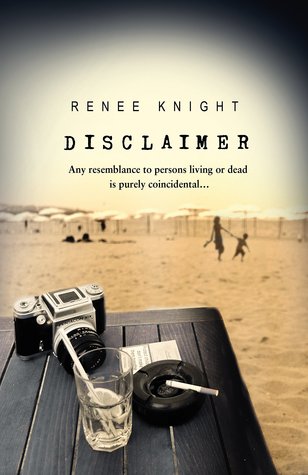
Disclaimer. Rating: Tiresome.

"The act of keeping the secret a secret has almost become bigger than the secret itself."

I have a great deal of experience with secrets. Back before I was on the run, I kept the secrets of people with too much money and power and not enough humility. I kept the secrets of a CEO who didn't know how to lock down his email properly. I kept the secrets of a CFO who wet his whiskers in company cream (yes, Wallace. You).

Now, I keep only my own secrets. This is the best part of my new life, reader: All of my secrets are mine. The burden of my own secrets is somewhat heavy - but oh, so much lighter than the secrets of others. I hope never to pick up anyone else's secrets ever again.

Disclaimer is about the burden of secrets and the weight of memory. Does one have the right to carry the secrets of another in order to protect their memory? And, who decides which memories are worth protecting?

Disclaimer by the respectable Renee Knight...


...is tolerable, especially for patient readers.

This book is of course compared to Gone Girl, which does a disservice to both books. I shall disillusion you right away, reader: this book is not Gone Girl. I think that the comparison arises from the fact that the characters are not particularly sympathetic; that is the only similarity I could find.

When allowed to stand on its own, the premise of Disclaimer is strong: a woman finds a book on her nightstand, and it turns out to be about her. The story within that book details events that unfolded several years earlier, when the woman was in Spain with her then-young son.

Disclaimer moves at the approximate pace of a heavily sedated chameleon, but maintains just enough suspense to draw the reader through the plot. The promise of a reveal is strong: we are going to find out what happened in Spain. We participate in this story through multiple character perspectives, and witness the decay of relationships and the power of grief from every conceivable angle. The relationships between characters are deeply nuanced, and each individual is given believable - even trustworthy - motivations and reactions.

The problem with Disclaimer is that it is so very glacial. I love drawn-out tension as much as the next fugitive book reviewer, but Disclaimer leans too hard into drawn-out and doesn't touch tension. The mystery of "how did the book get on the nightstand?" extends through a significant portion of the first act - which is why it's the only mystery addressed in the blurbs scattered across the internet - but it's discarded and exchanged for other, deeper mysteries later on. The fact that the extremely dissatisfying solution to that particular mystery takes so long to resolve is why I am putting all discussion of the real mystery of the book in the spoilers - because if you are planning to read this book, you will want something to hope for throughout the first half of it.

Now, for Spoilers.

The book takes ages to get to the actual meat of the plot, but here it is: There are photos of our main character which depict her engaging in sex acts with someone other than her husband, while on vacation with their very young son some fifteen years before. The young man who took the photos died the day after they were taken. The main character keeps insisting that the photos aren't what they look like, and in a bizarre comedy of sitcom-esque miscommunications, her life begins to crumble.

The miscommunications are the most frustrating part of this book by a long shot. Our main character keeps telling people that she needs to explain what really happened, but when given the chance, she unnecessarily stalls. This is emblematic of the book itself: it unnecessarily stalls. I guessed the surprise twist ending early on (something that I usually don't do, but it happens from time to time no matter how hard I try to resist), and watching the mishaps that led to other characters not even beginning to guess was painful.

So. Here's the reveal, reader: she was raped. Nobody stopped to even think that this might be the case, but there you have it. She kept it a secret for years, for the same reason many women do - shame, and horror, and the need to carry on. And when she is discovered by the father of the young man who took the photos - when he goes about trying to ruin her marriage and her career, when he threatens her life - she continues to keep it a secret.

I have two issues here. The first is the notion that a rape ruins a woman's life - that even if it doesn't ruin her life right away, it will catch up with her sooner or later, and ruin her. It even ruins her son's life - the final twist in the book, and the only one that took me by surprise, is that the five-year-old boy witnessed the rape, and it left him indelibly emotionally scarred. The moral of the story: You can't move past trauma without being thoroughly punished for having endured it.

The second issue I take with this theme is the weight of shame. Many women who are raped come away from the ordeal with a burden of shame. This book depicts that with realism at first, but later in the story, the shame becomes fetishistic. The woman is so obsessed with her shame that she allows her career and marriage to dissolve rather than speak up about the reality of what happened to her.

And when she does finally defend herself, the result is precisely what one would expect: people are horrified at what happened to her. People are horrified on her behalf. The father of the young man - the father who has been attempting to punish her (for what, by the way? For having sex with his son? This is never really clear) - is horrified, immediately attempts to rectify the situation, and then kills himself.

I can understand our main character deciding to keep her rape a secret, reader. Secrets weigh us down, but sometimes that weight is the only possible option. And yet, later on, her refusal to release that burden becomes entirely unrealistic. If she had simply told her husband and the father of the boy about the rape as soon as the blackmail began, the book would have no plot. I found myself again and again comparing the plot of Disclaimer to an episode bad sitcom: Oh, Gosh, It Was Just All One Big Misunderstanding!

This book did not make me angry or upset, but when I put it down, I felt that my time had been wasted. Save yourself that same fate, reader. Watch an episode of Full House (I hear it's on Netflix now) and read a Clive Barker short story to get your dose of darkness in. I promise, doing those two things will provide you with the same overall experience, and then you can move on to something better.

Rating: Tiresome. 


Possible ratings: Magnificent, Divine, Satisfactory, Tiresome, Lamentable, Execrable. This is a blog about words, what rating system did you expect?

Sunday, June 14, 2015

Dangerous Women. Rating: Lamentable.

Today, reader, I'm going to review an anthology.

Dangerous Women
I love short stories. I have never been able to write them myself - as I'm sure you can tell by the content of this blog, my strengths lie in nonfiction writing - but I have always consumed them avidly. I find great comfort in their self-containment. I have resisted reviewing anthologies until this point because they are so difficult to review; individual short stories should stand on their own merit, and I am loath to heap them together into a single review.

But Dangerous Women has riled me, reader. I am well and truly angry at this book, and the men who put it together - so a review it shall have.
Let's begin.

Dangerous Women, edited by George R. R. Martin & Gardner R. Dozois...


...is incredibly frustrating.
The title implies strongly that the short stories within the anthology will be about dangerous women. I was excited about the concept - it's nice to be represented in fiction every so often. I love reading strong female characters, especially those who know the thirst for revenge.
My excitement was misplaced. This is not a book full of short stories featuring dangerous women. This is not even a book full of stories featuring strong women. Most of the stories are about sexy women, and how they make men crazy with their magical sex powers. Several of the stories feature women merely as afterthoughts, as ornamentation, augmenting tales of male misadventure.

Because this isn't a typical novel review, I'll dispense with my usual formatting and simply give you an emotional highlight reel of what it was like to read Dangerous Women. This will be an experiment, reader. You and I will have to see for ourselves how it works out.

Let's get to it. 


Story: Some Desperado by Joe Abercrombie
Made me feel: Excited, optimistic
The first story in the anthology, and reader, it was beautiful. A promising start that increased my excitement with regards to the stories ahead. A strong female lead, cutthroat and ferocious, and undeniably dangerous.

Story: The Hands That are Not There by Melinda Snodgrass
Made me feel: Confused. Did I take a wrong turn somewhere?
The fourth story in the anthology. This story, narrated by a male protagonist, describes a stripper. Who may be a rebel. Or maybe she isn't! Reader, we never find out; but we do find out a lot about how sexy the 'dangerous' woman in the story is. It's not a bad story by any stretch of the imagination, but it sets a tone with which we'll unfortunately grow familiar over the course of the anthology: sexy lady uses dangerous feminine wiles to ruin a man.

Story: Bombshells by the delightfully named Jim Butcher
Made me feel: Deeply relieved
Magnificent! Perhaps the book can be redeemed after all? Maybe The Hands That are Not There was a fluke, included by accident, things happen, all can be forgiven. In Bombshells (story #5), the female protagonists are skilled, fearless, and capable. They are strategic and smart and yes, you should absolutely feel threatened by them. Within the first few paragraphs, the line "So anyway, there I was, washing the blood off in Waldo Butters' shower." - I laughed out loud. It's nice to see one's demographic represented in works of fiction.

Story: Wrestling Jesus by Joe R. Landsdale
Made me feel: I had to put the book down and go out to a face-to-face with someone who said he could get me a passport so that I might leave Berlin, and good thing, too, because I nearly threw it out a window. The book, not the passport. Abject disdain.
What in the name of Agent Hawthorne's pet corgi* did I just read? Again, a fine story - I can recognize good writing even if it's not my particular cup of Earl Grey Cream - but how on earth did this make it into an anthology about dangerous women? The woman, in the case of story 7, is a fickle vixen who will only sleep with the best wrestler in the ring. Old men continue to fight over her long past their prime. She does nothing in the story. If I recall correctly, she does not even speak. This story doesn't get an "F" on the literary Bechdel test - it gets a "What are you doing here? You don't even take this class. I'll check the roster... yeah, you're not even enrolled at this school, kid, get out of here."
*(Give Buttercup a pat on the head for me, Hawthorne. She's such a good dog!) 

Story: I Know How to Pick 'Em by Lawrence Block
Made me feel: Outrage. I found myself idly lighting matches and throwing them into the wind after reading this one - my muscle memory wishing I could burn this story to the ground.
The ninth story opens with disdain for the female character. "Woman like her, she'd have to be the star in all of her productions." What is the writer saying with this line? Don't you empathize with the woman, reader, she's bossy.
I am going to spoil this story for you, reader. I'm going to spoil the shit out of it, because I'm angry just remembering it. The male protagonist/narrator picks up a woman in a bar. A hot woman - the narrator spends a full page describing just how hot she is. They make out in the parking lot. Here's another excerpt: "I thought of doing her right there, just throwing her down and doing her on the gravel [...] Throw her a fast hard one, pull out and stand up while she's still quivering, and be out of there before she can get her game up and running."
So that's about what we're working with.
They go to a motel and have sex that is very satisfying for her, but not for him (this will be important later). He fantasizes briefly about beating her. She tries to convince him to murder her husband. He reminisces about the sexual abuse he suffered at the hands of his mother (perhaps she's supposed to be the 'dangerous woman' here?). Then, our protagonist literally says "my turn" before flipping his bedmate over, and 'riding her long and hard'. Poetry, no? He finally orgasms as he chokes her to death.
At this point, reader, I wondered - is this a joke? Maybe this anthology is intended to be a satirical take on how fiction treats women. I'm still not sure whether or not that's the case, to be quite honest with you.

Story: The Girl in the Mirror by Lev Grossman
Made me feel: Like I was rubbing aloe vera on a sunburn - the relief was there, but it didn't last long.
I love Lev Grossman's work, across the board. This story - the twelfth in the anthology, if you're keeping track of these things - is really an excerpt from the excellent third book of his Magicians trilogy (a series I devoured and will someday review on this blog as "divine"). Readers of the series will know, then, that [spoiler, you should expect these by now but this is fair warning] is the most dangerous of women: Alice, who was turned inhuman by magic she couldn't control. Plum, our female protagonist, is in her own right at least a little dangerous - in that I-know-just-enough-to-be-dangerous kind of way. I do wish that, for the sake of the anthology, it wasn't a male teacher saving the day - but then, heroes aren't the point of this anthology, are they? The dangerous women are. And Alice, for whom Grossman titled his excerpt, is well worthy of the descriptor "dangerous."

Story: City Lazarus by Diana Rowland
Made me feel: Deeply weary. It was all I could do to finish the anthology after this one.
Early in this, the fourteenth story, our protagonist is at his friend Peter's house. Peter's lady friend wants Peter to have sex with her. Peter doesn't feel like it, so invites the protagonist to satisfy her needs instead. Protagonist shoves Lady Friend into the bedroom, and emerges a few minutes later, flush with masculine swagger, saying "I wasn't trying to make her happy." We never hear anything about her again, reader, but it's a good snapshot of the relationship between the sexes in this story. This was apparently one of the very best stories out there, and the editors of this anthology picked it out of the crowd. They read it, said "oh, yes, this will be excellent for our collection of short stories about fierce, strong women!" They paid money for it, and published it. They did all of that on purpose, reader.
More about this story: It's strippers, again. One particular stripper. Apparently that is one of the primary occupations that Dangerous Women seek out, because how better to wield our Feminine Wiles against men? Well, the woman has wiles, and wield them she does. The end of the story is satisfying, but only because the rest of it is so painful to read - the outright repellent male protagonist gets his comeuppance, and our dangerous woman is finally revealed as dangerous in the penultimate paragraph of the story.
I will share a story of my own with you, reader - a true one, since (as I mentioned before) fiction is not my strong suit. I once went on a date - in the time before I was on the run, obviously. We watched a movie with an extremely gratuitous rape scene. I reacted with appropriate horror, and then my date turned to me and whispered "I know, but wait until you see how she gets back at him! It makes all this worthwhile."
The feeling I had as I drove home from that date is the same feeling that I had after reaching the end of City Lazarus. I found myself thinking, really? Does that really make all of the previous degradation 'worth it'?

--

I'm going to stop my review of the anthology here. There were many other stories - some good, some bad, some middling - but the ones I included in this review are a good representation of what you can expect if you make the mistake of picking up this book. To summarize: you can expect to feel a deep disappointment in the squandered potential of what should have been an anthology about dangerous women, but instead wound up being an anthology about how men view us.

My only comfort after subjecting myself to that anthology is this: I know what a truly dangerous woman is like. And she does not trifle with men like the ones in these stories.

Rating: Lamentable.


Possible ratings: Magnificent, Divine, Satisfactory, Tiresome, Lamentable, Execrable. This is a blog about words, what rating system did you expect?