Showing posts with label Lamentable. Show all posts

Tuesday, July 21, 2015

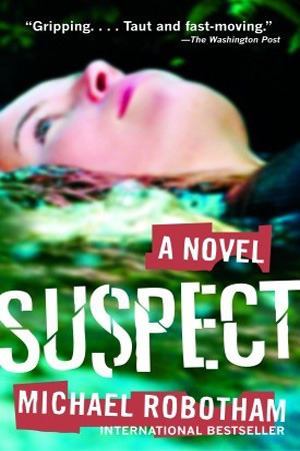
The Suspect. Rating: Lamentable.


"You know its going to be a bad day when you are having a prostate examination and you feel both of your doctor's hands on your shoulders!"
477362Reader, exciting news! Did you know that Agent Hawthorne has hired a psychologist to profile me? Of course you don't. Unless you're Agent Hawthorne, or the psychologist, or the person who approves Hawthorne's expenses. If you are any of those people, then please do drop me a line - I'd love to know what you're reading these days.

The psychologist (hello, Amy!) is a lovely woman, and very smart, and I have no doubt that she'll have me all figured out in a tick. As an homage to her hard work, I decided to read a book about a psychologist who winds up working with the police. Don't worry, though, Amy - I'm sure that your shared profession is where your resemblance to the protagonist ends, otherwise Hawthorne would never have hired you.

Oh, and nothing personal, Amy - but don't expect to catch me. That's how most of these books end, but you and I are not fictional characters, and we will probably never meet. Hope that's okay.

The Suspect by the capricious Michael Robotham...

...verged on being a good book, but then, it wasn't. 

The main character, Joseph O'Loughlin, is a psychologist who winds up being asked to assist in a murder investigation. Of course, he winds up getting pulled in way over his head, his life is at risk, yadda yadda, you know the drill with these ones. The thing/other thing in this particular story: O'Loughlin has recently been diagnosed with Parkinson's, and is struggling to cope with his diagnosis. This sounded to me like it would end up being a satisfactory read - overall, bog-standard, but with perhaps some added color; I do love a nuanced main character, as you well know. I had moderately high hopes.

Alas.

Joseph O'Loughlin is a stock character. He is a psychologist who is helping to investigate a crime - we all know how that plays out. The reader is treated to a straightforward 'should I try to help the person I suspect or should I just turn them in,' 'Oh dear, this is bigger than I thought,' 'O Woe Betide the Hubris of the Psychologist' narrative. This is nothing new, reader. It's boring, and I'm not going to talk about it any more. Instead, I'm going to talk about the women of The Suspect, because they are the thing that made this go from an average book to a below-average book.

I am not one to bandy about "this book hates women." Many books neglect the development of their female characters; some of them go so far as to affront the very nature of women in literature. An underdeveloped female character will not ruin a book for me - although I cannot immediately think of a book I've enjoyed in which the female characters were left to flounder in shallow narrative waters. Here is what will ruin a book for me, reader: women as decoration, obstacle, and spectacle.

All of these assessments will go from top to toes, so I'm putting them in the spoilers. If you're stopping here because you don't want the book spoiled, I'll leave you with this: if you're looking for a good crime novel, read something else.

Now, for Spoilers.

Here are the female characters: Sainted Wife, Broken Prostitute, Dead Nurse, Abusive Promiscuous Mother. I'm not going to include analyses of Vague Former Colleague, Organized Secretary, or Age-Ambiguous Daughter, because they are so underdeveloped that there is nothing for me to grab hold of - I have literally included everything about them in their titles.

Sainted Wife: O'Loughlin's wife is described as beautiful, intelligent, charitable, vivacious, and generally lovely. The narrator goes out of his way to repeatedly draw our attention to how essentially perfect she is. Her biggest flaw: not giving her husband enough sex, because she wants a baby, and is closely tracking her cycle in an attempt to maximize the efficacy of his sperm. When shit goes pear-shaped and O'Loughlin is suspected of murder, she finds out that he had sex with Broken Prostitute, and responds with appropriate outrage. Later, when he is vindicated of the murder charge, she turns out to be pregnant and decides to forgive and reconcile with O'Loughlin. The fact that he had sex with Broken Prostitute, sans condom, and then had sex with Sainted Wife, also sans condom, is brought up during the initial confrontation and then is never mentioned again. The high stakes ("Do you know how long I have to wait before I can get tested for AIDS? Three months.") evaporate, because no reason. She is domestic, child-focused, and yielding.

Dead Nurse: The kickoff to the murder investigation is the discovery of a body: the body of a nurse, who has been killed by oodles of torturous stab wounds. We discover, through the course of the book, that O'Loughlin knew her - he had treated her for self-harm. His treatment of her included sending her home with fresh scalpel blades to ensure that she would use clean ones (remember, Amy, I think you're much smarter than him). We also discover that she had attempted to seduce him, and, when rebuffed, she had fabricated a rape accusation against him. She is unstable, manipulative, and (of course) hot for the main character.

Abusive Promiscuous Mother: This is the biggest spoiler in this review, so feel free to skip it if you're worried about that. This character is the mother of the murderer(s). At the end of the book, here's what we've learned about her. (a) She falsely accused her husband of sexually abusing her son, because she wanted a divorce and for some unexplained reason did not just divorce him. (b) She had sex with... everyone. Everyone in the world. (c) She took her son and stepson to watch her participate in orgies ("She was laid out on the table like a smorgasbord. Naked. There were dozens of hands on her. Anyone could do anything they wanted. She had enough for all of them. Pain. Pleasure. It was all the same to her"). And, last but certainly not least - (d) She forced her son and stepson to participate in the orgies themselves. She tries to have sex with O'Loughlin on her deathbed; then, cancer kills her, and the reader is meant to understand that death is the least she deserves. She is the worst kind of Oedipal nightmare; a perversion of everything a mother and a woman should be.

Broken Prostitute: This character is the one that most clearly highlighted this book's hatred for women. She only contributes to the plot in that O'Loughlin has sex with her. The description of this, by the way, gives her about as much agency as a slick palm, and in no way acknowledges the power dynamic between a psychologist and the woman who he treated when she was a fifteen-year-old-prostitute.
While this is her only participation in the plot of the book - 'person who main character sleeps with because he's sad about his Parkinson's' - she gets a high wordcount. Why do you suppose she gets space on the page, reader? You should be able to guess this by now.
Yes, indeed, it's the thing you were hoping it wouldn't be. The space afforded to this woman in The Suspect is devoted to describing her rapes. Lots of them. In plenty of detail - detail which, really, O'Loughlin (the first-person narrator) couldn't know. But why not stretch POV for the sake of delving into a narrative of multiple gang-rapes? And then, why not have her die horribly too (suffocation, in case you were wondering). After all, she exists within the narrative solely to tempt, to suffer, and (ultimately) to die.

So, that's the book. Women who are either perfect or terrible; women who want O'Loughlin's dick and/or semen; women who either bear children or die horribly. At the end of the book, the person who O'Loughlin thinks did it, did it. O'Loughlin is a hero, and his wife loves him, and they're going to have a baby together, and nevermind any of the rest of it. As we're explicitly told: he ends the book lucky.

The end, reader.


Rating: Lamentable. 


Possible ratings: Magnificent, Divine, Satisfactory, Tiresome, Lamentable, Execrable. This is a blog about words, what rating system did you expect?

Sunday, June 14, 2015

Dangerous Women. Rating: Lamentable.

Today, reader, I'm going to review an anthology.

Dangerous Women
I love short stories. I have never been able to write them myself - as I'm sure you can tell by the content of this blog, my strengths lie in nonfiction writing - but I have always consumed them avidly. I find great comfort in their self-containment. I have resisted reviewing anthologies until this point because they are so difficult to review; individual short stories should stand on their own merit, and I am loath to heap them together into a single review.

But Dangerous Women has riled me, reader. I am well and truly angry at this book, and the men who put it together - so a review it shall have.
Let's begin.

Dangerous Women, edited by George R. R. Martin & Gardner R. Dozois...


...is incredibly frustrating.
The title implies strongly that the short stories within the anthology will be about dangerous women. I was excited about the concept - it's nice to be represented in fiction every so often. I love reading strong female characters, especially those who know the thirst for revenge.
My excitement was misplaced. This is not a book full of short stories featuring dangerous women. This is not even a book full of stories featuring strong women. Most of the stories are about sexy women, and how they make men crazy with their magical sex powers. Several of the stories feature women merely as afterthoughts, as ornamentation, augmenting tales of male misadventure.

Because this isn't a typical novel review, I'll dispense with my usual formatting and simply give you an emotional highlight reel of what it was like to read Dangerous Women. This will be an experiment, reader. You and I will have to see for ourselves how it works out.

Let's get to it. 


Story: Some Desperado by Joe Abercrombie
Made me feel: Excited, optimistic
The first story in the anthology, and reader, it was beautiful. A promising start that increased my excitement with regards to the stories ahead. A strong female lead, cutthroat and ferocious, and undeniably dangerous.

Story: The Hands That are Not There by Melinda Snodgrass
Made me feel: Confused. Did I take a wrong turn somewhere?
The fourth story in the anthology. This story, narrated by a male protagonist, describes a stripper. Who may be a rebel. Or maybe she isn't! Reader, we never find out; but we do find out a lot about how sexy the 'dangerous' woman in the story is. It's not a bad story by any stretch of the imagination, but it sets a tone with which we'll unfortunately grow familiar over the course of the anthology: sexy lady uses dangerous feminine wiles to ruin a man.

Story: Bombshells by the delightfully named Jim Butcher
Made me feel: Deeply relieved
Magnificent! Perhaps the book can be redeemed after all? Maybe The Hands That are Not There was a fluke, included by accident, things happen, all can be forgiven. In Bombshells (story #5), the female protagonists are skilled, fearless, and capable. They are strategic and smart and yes, you should absolutely feel threatened by them. Within the first few paragraphs, the line "So anyway, there I was, washing the blood off in Waldo Butters' shower." - I laughed out loud. It's nice to see one's demographic represented in works of fiction.

Story: Wrestling Jesus by Joe R. Landsdale
Made me feel: I had to put the book down and go out to a face-to-face with someone who said he could get me a passport so that I might leave Berlin, and good thing, too, because I nearly threw it out a window. The book, not the passport. Abject disdain.
What in the name of Agent Hawthorne's pet corgi* did I just read? Again, a fine story - I can recognize good writing even if it's not my particular cup of Earl Grey Cream - but how on earth did this make it into an anthology about dangerous women? The woman, in the case of story 7, is a fickle vixen who will only sleep with the best wrestler in the ring. Old men continue to fight over her long past their prime. She does nothing in the story. If I recall correctly, she does not even speak. This story doesn't get an "F" on the literary Bechdel test - it gets a "What are you doing here? You don't even take this class. I'll check the roster... yeah, you're not even enrolled at this school, kid, get out of here."
*(Give Buttercup a pat on the head for me, Hawthorne. She's such a good dog!) 

Story: I Know How to Pick 'Em by Lawrence Block
Made me feel: Outrage. I found myself idly lighting matches and throwing them into the wind after reading this one - my muscle memory wishing I could burn this story to the ground.
The ninth story opens with disdain for the female character. "Woman like her, she'd have to be the star in all of her productions." What is the writer saying with this line? Don't you empathize with the woman, reader, she's bossy.
I am going to spoil this story for you, reader. I'm going to spoil the shit out of it, because I'm angry just remembering it. The male protagonist/narrator picks up a woman in a bar. A hot woman - the narrator spends a full page describing just how hot she is. They make out in the parking lot. Here's another excerpt: "I thought of doing her right there, just throwing her down and doing her on the gravel [...] Throw her a fast hard one, pull out and stand up while she's still quivering, and be out of there before she can get her game up and running."
So that's about what we're working with.
They go to a motel and have sex that is very satisfying for her, but not for him (this will be important later). He fantasizes briefly about beating her. She tries to convince him to murder her husband. He reminisces about the sexual abuse he suffered at the hands of his mother (perhaps she's supposed to be the 'dangerous woman' here?). Then, our protagonist literally says "my turn" before flipping his bedmate over, and 'riding her long and hard'. Poetry, no? He finally orgasms as he chokes her to death.
At this point, reader, I wondered - is this a joke? Maybe this anthology is intended to be a satirical take on how fiction treats women. I'm still not sure whether or not that's the case, to be quite honest with you.

Story: The Girl in the Mirror by Lev Grossman
Made me feel: Like I was rubbing aloe vera on a sunburn - the relief was there, but it didn't last long.
I love Lev Grossman's work, across the board. This story - the twelfth in the anthology, if you're keeping track of these things - is really an excerpt from the excellent third book of his Magicians trilogy (a series I devoured and will someday review on this blog as "divine"). Readers of the series will know, then, that [spoiler, you should expect these by now but this is fair warning] is the most dangerous of women: Alice, who was turned inhuman by magic she couldn't control. Plum, our female protagonist, is in her own right at least a little dangerous - in that I-know-just-enough-to-be-dangerous kind of way. I do wish that, for the sake of the anthology, it wasn't a male teacher saving the day - but then, heroes aren't the point of this anthology, are they? The dangerous women are. And Alice, for whom Grossman titled his excerpt, is well worthy of the descriptor "dangerous."

Story: City Lazarus by Diana Rowland
Made me feel: Deeply weary. It was all I could do to finish the anthology after this one.
Early in this, the fourteenth story, our protagonist is at his friend Peter's house. Peter's lady friend wants Peter to have sex with her. Peter doesn't feel like it, so invites the protagonist to satisfy her needs instead. Protagonist shoves Lady Friend into the bedroom, and emerges a few minutes later, flush with masculine swagger, saying "I wasn't trying to make her happy." We never hear anything about her again, reader, but it's a good snapshot of the relationship between the sexes in this story. This was apparently one of the very best stories out there, and the editors of this anthology picked it out of the crowd. They read it, said "oh, yes, this will be excellent for our collection of short stories about fierce, strong women!" They paid money for it, and published it. They did all of that on purpose, reader.
More about this story: It's strippers, again. One particular stripper. Apparently that is one of the primary occupations that Dangerous Women seek out, because how better to wield our Feminine Wiles against men? Well, the woman has wiles, and wield them she does. The end of the story is satisfying, but only because the rest of it is so painful to read - the outright repellent male protagonist gets his comeuppance, and our dangerous woman is finally revealed as dangerous in the penultimate paragraph of the story.
I will share a story of my own with you, reader - a true one, since (as I mentioned before) fiction is not my strong suit. I once went on a date - in the time before I was on the run, obviously. We watched a movie with an extremely gratuitous rape scene. I reacted with appropriate horror, and then my date turned to me and whispered "I know, but wait until you see how she gets back at him! It makes all this worthwhile."
The feeling I had as I drove home from that date is the same feeling that I had after reaching the end of City Lazarus. I found myself thinking, really? Does that really make all of the previous degradation 'worth it'?

--

I'm going to stop my review of the anthology here. There were many other stories - some good, some bad, some middling - but the ones I included in this review are a good representation of what you can expect if you make the mistake of picking up this book. To summarize: you can expect to feel a deep disappointment in the squandered potential of what should have been an anthology about dangerous women, but instead wound up being an anthology about how men view us.

My only comfort after subjecting myself to that anthology is this: I know what a truly dangerous woman is like. And she does not trifle with men like the ones in these stories.

Rating: Lamentable.


Possible ratings: Magnificent, Divine, Satisfactory, Tiresome, Lamentable, Execrable. This is a blog about words, what rating system did you expect?

Saturday, April 25, 2015

Bumped. Rating: Lamentable.

“It's human nay-cha...For me to sperminay-cha”

That's not true. I would never reveal the real accelerant.I have endured many nigh-unendurable things in my life, reader. I have driven across state lines in the middle of the night with my headlights off and a cyanide pill between my molars (just in case). I have successfully hidden false documents under a low-quality wig during a patdown. I once sat through a two-hour long Powerpoint presentation on Synergistic Innovation.

None of these trials come remotely close to meeting the suffering I endured in reading Bumped.

I found Bumped sitting on top of a vending machine at a rest stop. I left my copy at a different rest stop, on top of a vending machine, with an inscription that reads "Turn back now; you are making a terrible mistake."


Bumped by the vacant Megan McCafferty


...is an awful book. 

The premise is by now a cliche, but when I read Bumped, the exploitation of teen fertility was not yet a YA standby. The book is your standard plague-sterilizes-adults, people-buy-babies type of plot, but with a shining candy coat in the place of well-developed dystopian depth.


Our protagonist is named Melody, and she has a sister named (oh, reader, I am sorry about this) Harmony. They live in the future. In case you were not aware, the future features a lot of eyeball-based technology, which requires eye-rolling and blinking to control. I would be ever so pleased to get an analysis of this technology by the brilliant minds behind scifiinterfaces.com, but alas, I am left to my own devices as regards an analysis - so I will do the responsible thing and leave it at "this is bullshit". 


Melody is a fertile teen; her secret sister, Harmony, lives on a religious commune that rejects the commercialization of pregnancy but encourages young marriage. Both are white, able-bodied, heterosexual, cisfemale, attractive, athletic, and intelligent. Melody's pregnancy agent (it's what it sounds like) connects her with a famous sperm donor, Harmony shows up at exactly the wrong time, there is a sitcom-worthy case of mistaken identity, and everyone learns valuable lessons about themselves.


I won't go more into the plot than that, reader, because shallow things rarely need to be thoroughly plumbed. The premise is incredibly weak, the science is threadbare, and the portrayal of religion is hackneyed at best. 


This is not what makes the book torturously bad. I can muscle through a weak premise and thin science if the characters are compelling and the writing is good. That is not the case with Bumped. The characters are not unlikable; they are merely deeply uninteresting. The problem is the writing, which is uniformly bad. Having read Bumped, I am certain that Ms. McCafferty has in fact never spoken to nor observed a living teenager. McCafferty's teens are insufferable, overstimulated, slang-saturated emoticons - effectively, they are everything the media wants parents to believe their children will become. Were this book set in 2003, they would be having rainbow parties. Were it set in 2008, they would be trading sex bracelets. They are not nuanced, troubled, thoughtful, or questioning; they are not searching for answers or identities. Instead they value what the establishment tells them to value, and they do it without hesitation.

Now, for Spoilers.

 You came here for spoilers, so spoilers you shall have. The ending is no more interesting than the book merits, and no less predictable. At the end of the book, Melody has decided that she does not want to have a baby with the famous sperm donor, and Harmony has conceived with said famous sperm donor but has retreated to her religious community to bear the child with her (here's the big twist) gay husband. Both were remarkably easy to sway from their apparently firmly-held convictions. But, reader, there's no getting around it: this book was published for a reason. Someone, somewhere, thought that there was an excuse for the incredibly one-dimensional writing.

When discussing this book, there is an elephant in the room, and he would like to talk to you about satire.

Fans of Bumped like to trumpet a notion they have, which is that it makes sense for the book to be so terrible because it is satire. Melody is intended to represent the pop culture moment of two years ago, when teen pregnancy was all over the media. You remember, reader. Sixteen and Pregnant, Secret Life of the American Teen, Teen Mom. Yes, let your mind travel back to that critical time in our shared cultural memory. Harmony is intended to represent the religious backlash against teen pregnancy during that same time period. 

Melody's decision to not have sex with a stranger for money is, of course, the big rebellion against this dystopian future society (as is Harmony's decision to have sex with someone she is attracted to, rejecting her faith's narrative of sex inside of marriage regardless of desire). The two girls' actions are intended to represent a journey to the middle of what was then being portrayed in the media as a charged, polarizing issue.

The problem with the "satire" label is, of course, that satire alone does not lend merit. Satire is a category that can explain context, but it cannot rewrite a novel. The label "satire" does not remove passages like "Just thinking about all the drama gets my tubes in a twist".

"A Modest Proposal" is satire. "The Colbert Report" is satire. "Bumped" is trash angling for redemption by means of a label it does not deserve.

Rating: Lamentable. 


Possible ratings: Magnificent, Divine, Satisfactory, Tiresome, Lamentable, Execrable. This is a blog about words, what rating system did you expect?

Saturday, February 28, 2015

The Last Chinese Chef. Rating: Lamentable.

“Could the food in China be truly exceptional? It was possible, she thought now.”


I haven't been this disappointed since the time I realized my fake passport didn't have properly reactive paper.I did not read this book alone. I read it at the same time as my closest (only) friend, the doorman at the old office building. As he opened the door in the morning, we'd briefly discuss the chapter we'd read the night before. 'Derivative!' he'd cry. 'Overwrought!' I'd respond. Then, I would be off into the abyss of the elevator, preparing my soul for another day of compression. How I miss our little doorstop book club! I have not seen my friend since the last day that the building stood intact.

I digress. The book is not good.

It could have been good. It could have been great. There's a reason it garnered a rating of "lamentable" rather than "execrable" - there is a lovely story hidden under the layer of smeary residue that was deemed necessary to market this book. I almost want to write two reviews - one for the demoralizing book that I read, and one for the striking story that could have been.

The Last Chinese Chef by the presumably dismayed Nicole Mones


...could have been a beautifully written multigenerational family drama nestled in a crisp bed of gorgeous food writing. Here is the story that would be revealed if the author scraped off the film of ordure disguising it as an irredeemable disappointment: an American-born Chinese chef leaves home and heads to China, to learn the Imperial style of cooking mastered by his grandfather. He battles through arduous cooking lessons from his uncles, learns about his family and himself through the lens of a completely different philosophy of cooking, immerses himself in the traditions of Chinese culinary culture. He reconnects with his father and, regardless of the outcome of the cooking contest around which the plot is anchored, he learns the true triumph of connection to family, history, and cultural identity. 

That is the story that could have been. I adored every chapter that was centered around Sam Liang, his family, his ancestral records, and - most importantly - the food that tied them all together. There were also a few standalone chapters exploring China's cultural identity before, during, and after the Great Leap Forward. These chapters were wonderful, insightful, and compelling. Had that been the book published, I would be giving Mones a standing ovation. 

But. At some point during the process of the publication and editing of this book, some enterprising fool must have said "we need to put a white lady on this. Eat-Pray-Love it." Enter the abhorrent Maggie McElroy.

Suddenly, that crisp and compelling multigenerational family drama is weighed down by an albatross masquerading as a necessary lens of accessibility. A White Lady, whose only distinguishing feature is that she is a widowed food journalist, is sent to Explore The Orient, Discover Herself, Learn to Love Again. Reader, I have eaten tripe, and it is far more appealing than this nauseating feature of contemporary American fiction. We are presented with a woman who has apparently never been in the vicinity of a Chinese person. Her naivete extends almost into the realm of genre parody. Every bite of foreign food that she eats is described in insipid amazement - all of it is stunning, life-altering, perfect and oh-so-different. Maggie gets a massage from a nameless, faceless, Magical Chinese Person, and her body is suddenly awakened to the mysteries of human touch.

This character describes listening to Chinese conversation as akin to overhearing beautiful birdsong. How I wish that I was being facetious.


There are two outrages here. First (and most prominent), the enfeeblement of Liang's story by the addition of the Navel-Gazing White Lady. Second (and far less important, but still upsetting), the unmitigated anemia of what could have been a nuanced female character who is, for the first time, in a place that she doesn't understand. If one must stick a white lady onto the front of a wonderful plot, one could at least go so far as to give her any dimension at all to excuse her otherwise inexplicable presence. Instead, Maggie is a Lisa Frank sticker applied to a Qiu Ying scroll; she is a smear of ketchup on a perfectly crafted char siu bao.

I cannot go on describing this aspect of the novel. It is far too upsetting to continue. I shall move on.

Now, for Spoilers.


There is a romance. 

Of course there is. Of course this book could not close without putting a seal on the most predictable facet of an already repellent trope. Throughout the book, Sam Liang and Maggie McElroy impose upon the reader a regular, glaring insistence that they are and shall always remain 'just friends'. As the book clearly states, Liang never-ever-never looks at Maggie in the "man-woman way". I shall refrain from commentary on  this Tarzanesque allusion to sexual desire in the man who repeatedly delivers morsels of steaming, succulent meat to the food journalist's eagerly parted lips. Evidently, the reader is meant to be shocked when the two protagonists, without any prior display of believable chemistry, fall mechanically into bed together.

I suppose it is impossible that Liang could have been redeemed through a deeper and better understanding of his family history; in forging a connection with his distant father; with his acceptance of the imperfections of his family relationships. He could not possibly find contentment in his own journey of discovery. Instead, he must serve as the pinnacle of Maggie's journey of self-discovery. He is the man who reawakens her body and soul through food, lust, and (eye-rollingly, wearily trudging across the finish line) maybe even love.

Reader, I am nauseated. Which is shameful - the passages in this book that turn a focus on food are written with such skill and depth that nausea should be an impossible achievement. I am pained on behalf of the author - whatever impulse or individual moved her to include such a threadbare romantic plot in what could otherwise have been a gorgeous novel was absolutely undeserving of her attentions, much less her obedience. I can only hope that a revision is released - a director's cut, if you will - and that it reveals the tale that should have been told.

Rating: Lamentable. 

Possible ratings: Magnificent, Divine, Satisfactory, Tiresome, Lamentable, Execrable. This is a blog about words, what rating system did you expect?