Sunday, June 14, 2015

Dangerous Women. Rating: Lamentable.

Today, reader, I'm going to review an anthology.

Dangerous Women
I love short stories. I have never been able to write them myself - as I'm sure you can tell by the content of this blog, my strengths lie in nonfiction writing - but I have always consumed them avidly. I find great comfort in their self-containment. I have resisted reviewing anthologies until this point because they are so difficult to review; individual short stories should stand on their own merit, and I am loath to heap them together into a single review.

But Dangerous Women has riled me, reader. I am well and truly angry at this book, and the men who put it together - so a review it shall have.
Let's begin.

Dangerous Women, edited by George R. R. Martin & Gardner R. Dozois...


...is incredibly frustrating.
The title implies strongly that the short stories within the anthology will be about dangerous women. I was excited about the concept - it's nice to be represented in fiction every so often. I love reading strong female characters, especially those who know the thirst for revenge.
My excitement was misplaced. This is not a book full of short stories featuring dangerous women. This is not even a book full of stories featuring strong women. Most of the stories are about sexy women, and how they make men crazy with their magical sex powers. Several of the stories feature women merely as afterthoughts, as ornamentation, augmenting tales of male misadventure.

Because this isn't a typical novel review, I'll dispense with my usual formatting and simply give you an emotional highlight reel of what it was like to read Dangerous Women. This will be an experiment, reader. You and I will have to see for ourselves how it works out.

Let's get to it. 


Story: Some Desperado by Joe Abercrombie
Made me feel: Excited, optimistic
The first story in the anthology, and reader, it was beautiful. A promising start that increased my excitement with regards to the stories ahead. A strong female lead, cutthroat and ferocious, and undeniably dangerous.

Story: The Hands That are Not There by Melinda Snodgrass
Made me feel: Confused. Did I take a wrong turn somewhere?
The fourth story in the anthology. This story, narrated by a male protagonist, describes a stripper. Who may be a rebel. Or maybe she isn't! Reader, we never find out; but we do find out a lot about how sexy the 'dangerous' woman in the story is. It's not a bad story by any stretch of the imagination, but it sets a tone with which we'll unfortunately grow familiar over the course of the anthology: sexy lady uses dangerous feminine wiles to ruin a man.

Story: Bombshells by the delightfully named Jim Butcher
Made me feel: Deeply relieved
Magnificent! Perhaps the book can be redeemed after all? Maybe The Hands That are Not There was a fluke, included by accident, things happen, all can be forgiven. In Bombshells (story #5), the female protagonists are skilled, fearless, and capable. They are strategic and smart and yes, you should absolutely feel threatened by them. Within the first few paragraphs, the line "So anyway, there I was, washing the blood off in Waldo Butters' shower." - I laughed out loud. It's nice to see one's demographic represented in works of fiction.

Story: Wrestling Jesus by Joe R. Landsdale
Made me feel: I had to put the book down and go out to a face-to-face with someone who said he could get me a passport so that I might leave Berlin, and good thing, too, because I nearly threw it out a window. The book, not the passport. Abject disdain.
What in the name of Agent Hawthorne's pet corgi* did I just read? Again, a fine story - I can recognize good writing even if it's not my particular cup of Earl Grey Cream - but how on earth did this make it into an anthology about dangerous women? The woman, in the case of story 7, is a fickle vixen who will only sleep with the best wrestler in the ring. Old men continue to fight over her long past their prime. She does nothing in the story. If I recall correctly, she does not even speak. This story doesn't get an "F" on the literary Bechdel test - it gets a "What are you doing here? You don't even take this class. I'll check the roster... yeah, you're not even enrolled at this school, kid, get out of here."
*(Give Buttercup a pat on the head for me, Hawthorne. She's such a good dog!) 

Story: I Know How to Pick 'Em by Lawrence Block
Made me feel: Outrage. I found myself idly lighting matches and throwing them into the wind after reading this one - my muscle memory wishing I could burn this story to the ground.
The ninth story opens with disdain for the female character. "Woman like her, she'd have to be the star in all of her productions." What is the writer saying with this line? Don't you empathize with the woman, reader, she's bossy.
I am going to spoil this story for you, reader. I'm going to spoil the shit out of it, because I'm angry just remembering it. The male protagonist/narrator picks up a woman in a bar. A hot woman - the narrator spends a full page describing just how hot she is. They make out in the parking lot. Here's another excerpt: "I thought of doing her right there, just throwing her down and doing her on the gravel [...] Throw her a fast hard one, pull out and stand up while she's still quivering, and be out of there before she can get her game up and running."
So that's about what we're working with.
They go to a motel and have sex that is very satisfying for her, but not for him (this will be important later). He fantasizes briefly about beating her. She tries to convince him to murder her husband. He reminisces about the sexual abuse he suffered at the hands of his mother (perhaps she's supposed to be the 'dangerous woman' here?). Then, our protagonist literally says "my turn" before flipping his bedmate over, and 'riding her long and hard'. Poetry, no? He finally orgasms as he chokes her to death.
At this point, reader, I wondered - is this a joke? Maybe this anthology is intended to be a satirical take on how fiction treats women. I'm still not sure whether or not that's the case, to be quite honest with you.

Story: The Girl in the Mirror by Lev Grossman
Made me feel: Like I was rubbing aloe vera on a sunburn - the relief was there, but it didn't last long.
I love Lev Grossman's work, across the board. This story - the twelfth in the anthology, if you're keeping track of these things - is really an excerpt from the excellent third book of his Magicians trilogy (a series I devoured and will someday review on this blog as "divine"). Readers of the series will know, then, that [spoiler, you should expect these by now but this is fair warning] is the most dangerous of women: Alice, who was turned inhuman by magic she couldn't control. Plum, our female protagonist, is in her own right at least a little dangerous - in that I-know-just-enough-to-be-dangerous kind of way. I do wish that, for the sake of the anthology, it wasn't a male teacher saving the day - but then, heroes aren't the point of this anthology, are they? The dangerous women are. And Alice, for whom Grossman titled his excerpt, is well worthy of the descriptor "dangerous."

Story: City Lazarus by Diana Rowland
Made me feel: Deeply weary. It was all I could do to finish the anthology after this one.
Early in this, the fourteenth story, our protagonist is at his friend Peter's house. Peter's lady friend wants Peter to have sex with her. Peter doesn't feel like it, so invites the protagonist to satisfy her needs instead. Protagonist shoves Lady Friend into the bedroom, and emerges a few minutes later, flush with masculine swagger, saying "I wasn't trying to make her happy." We never hear anything about her again, reader, but it's a good snapshot of the relationship between the sexes in this story. This was apparently one of the very best stories out there, and the editors of this anthology picked it out of the crowd. They read it, said "oh, yes, this will be excellent for our collection of short stories about fierce, strong women!" They paid money for it, and published it. They did all of that on purpose, reader.
More about this story: It's strippers, again. One particular stripper. Apparently that is one of the primary occupations that Dangerous Women seek out, because how better to wield our Feminine Wiles against men? Well, the woman has wiles, and wield them she does. The end of the story is satisfying, but only because the rest of it is so painful to read - the outright repellent male protagonist gets his comeuppance, and our dangerous woman is finally revealed as dangerous in the penultimate paragraph of the story.
I will share a story of my own with you, reader - a true one, since (as I mentioned before) fiction is not my strong suit. I once went on a date - in the time before I was on the run, obviously. We watched a movie with an extremely gratuitous rape scene. I reacted with appropriate horror, and then my date turned to me and whispered "I know, but wait until you see how she gets back at him! It makes all this worthwhile."
The feeling I had as I drove home from that date is the same feeling that I had after reaching the end of City Lazarus. I found myself thinking, really? Does that really make all of the previous degradation 'worth it'?

--

I'm going to stop my review of the anthology here. There were many other stories - some good, some bad, some middling - but the ones I included in this review are a good representation of what you can expect if you make the mistake of picking up this book. To summarize: you can expect to feel a deep disappointment in the squandered potential of what should have been an anthology about dangerous women, but instead wound up being an anthology about how men view us.

My only comfort after subjecting myself to that anthology is this: I know what a truly dangerous woman is like. And she does not trifle with men like the ones in these stories.

Rating: Lamentable.


Possible ratings: Magnificent, Divine, Satisfactory, Tiresome, Lamentable, Execrable. This is a blog about words, what rating system did you expect?

Tuesday, June 9, 2015

The Nightingale. Rating: Magnificent.


"Men tell stories. Women get on with it. For us it was a shadow war. There were no parades for us when it was over, no medals or mentions in history books. We did what we had to during the war, and when it was over, we picked up the pieces and started our lives over."

I know that's a long pull quote, reader, but it's so true that I had to include the entire thing. Women survive. We do what we must. Sometimes, we must run; sometimes, we must stay and entertain the enemy. Sometimes, we must turn ourselves over to the authorities (just kidding, Agent Hawthorne!) - sometimes, we must disguise ourselves as gas station attendants and fill the tanks of our pursuers while they buy gum and Mountain Dew (really, though, Hawthorne, you should lay off the green stuff - that's why you have the ulcer. It's not because of me; it's because you drink soda that glows in the dark).

Men go to war; women stay behind. Men lose legs and eyes and lives, and they get parades. Women lose husbands and sons and brothers and food and clothes and housing and dignity and decency, and when the men come back, we lose the jobs that we did in their stead while they were off fighting for Queen and Country. And we take care of them, because they have suffered.

Nobody takes care of the women. We wrap our prematurely white hair in scarves and we go to the market to buy food and we look at each other as though we are the same people who we were before we did the things that we had to do while the men were away.

One day, reader, I will pick up the pieces and start my life over. I won't be on the run forever. One day, Agent Hawthorne will retire to a cozy cabin with his husband and their daughter Melanie, and I will put down roots in a small town far from where they live, and we will exchange the occasional postcard and laugh about all of this. I will never get my left pinky finger back, but I will do what all women must do with loss: accept it, and continue.

The Nightingale by the phosphorescent Kristin Hannah

...Is about what women do when the men leave to fight a war.

Kristin Hannah masterfully examines several angles of the invasion and occupation of France by Nazi Germany. This examination is woven into the story of a family - two sisters, a father, and a child. Vianne, the older sister, is at home with a young daughter; her husband is a German prisoner of war, and Vianne and her daughter are left behind to cope. Isabelle, the younger sister, is caught in the march out of Paris when the Nazis invade - a girl alone in a war fought by men who history will remember as great and terrible.

What happens, then, to the women in this story? Isabelle - after an accelerated wartime romance and betrayal - dives into the resistance. She is loud, fearless, and reckless. She puts herself, her sister, and her niece into constant danger. She is brave.

Vianne, meanwhile, is forced to take on a Nazi when her home is quartered. He sleeps under her blankets, eats at her table, and speaks to her child. She is terrified. She is disgusted. She is afraid of how likable the Nazi soldier is. She is afraid of how easy it would be to cooperate with him. She is also very brave.

The women in this story are written beautifully: they are flawed, they make stupid decisions, and they hurt each other. They are also strong, and tenacious, and put themselves into danger to help each other. They are not fearless, but they are valiant. They are survivors.

Now, for Spoilers.


This story is not about how brave people can prevail over all odds and against all obstacles.

It is about the horrors of war, and the brutality that is visited upon women when men decide to fight.

As a reader, I was incredibly proud of the way that Isabelle grows up in the latter half of the book. She goes from impetuous and headstrong to competent and sharp. She is honed by the war - she starts as someone who seeks adventure, and becomes someone who seeks to do what is right. She puts herself at great personal risk, shepherding downed Allied pilots over the Pyrenees to safety. Her story is realistic: she is captured by the Nazis, who subject her to brutal torture. This is what happens to freedom fighters, reader. They suffer.

 She is released by them when her father claims her code name - Nightingale - and forfeits his life so that she might survive. Her struggles do not end there, but I shan't give everything away, reader.

Her sister Vianne also grows up, although in a very different way. Her story is not one of triumphant rebellion that is punished brutally; her story is instead one of brutal punishment that feeds a low, steady flame of resistance. After she and her sister inadvertently kill the Nazi who is living in her home, she is forced to provide lodging to another Nazi - one who presents a far less nuanced picture of the men who go to war. We are reminded by this second tenant that, while not all Nazi soldiers were monsters, some certainly were.

She protects her daughter from the man, but cannot protect her from the knowledge of her mother's suffering: Vianne's life is colored by starvation, beatings, and rape. During this time of absolute suffering, she also quietly smuggles Jewish children to an orphanage, giving them new identities so that they might survive the occupation. Her suffering fuels her drive to combat the Nazi occupation.

At the end of the story, the sisters are reunited. Vianne is pregnant. Isabelle is broken. Vianne's husband returns home; he is also broken, but in a very different way.

And everyone picks up the pieces, and they start over.

They do not all survive the starting over. It's that way, with war - some people are able to hold themselves intact until the horrors end, and when they relax, they crumble. This is the spoilers section, but I will keep that part to myself, reader; you should really go and find this book and sit down with it and turn pages until it is finished. Then, you should turn back to the first page and start reading it again.


Rating: Magnificent. 


Possible ratings: Magnificent, Divine, Satisfactory, Tiresome, Lamentable, Execrable. This is a blog about words, what rating system did you expect?

Sunday, May 31, 2015

A Sudden Light. Rating: tiresome.

"More wine helps; it takes the edge off the despair."

I am a feminist. This should not surprise you, reader. I am a woman, and I like to think of myself as a human, and I would be simply delighted if others would think of me the same way.

I have spent much of my life angry because of this belief that I, as a woman, deserve to be treated as though I hold the same value as men do. Lately, I've been finding my hold on that angry slipping. There is only so much outrage I can muster, as a woman - outrage for the bosses who stare at our breasts during annual reviews; outrage for the retailers who insist that zero is a size rather than an indicator of absence; outrage for the world that tells us to either sit down or bend over.

Lately, I've just been... tired. It's a kind of fatigue - I see a politician insisting that he understands the needs of women better than we do, and I can't always muster my usual anger.

I relieve that weariness by reminding myself: they oppress us because they fear us. If we were truly powerless, reader, they would not bother with us at all.


A Sudden Light by the ruminative Garth Stein...


...is disappointing.

The book tells the coming-of-age story of a young man who spends a summer discovering his roots. The story plays with themes of familial strife, adolescent self-discovery, transcendentalism, and the weight of ancestral guilt. It's a lot of story, and it's written with just enough intrigue to haul the reader through the muddier sections of plot. Let's explore.

Trevor Riddell, age 14, is enduring familial upheaval - his parents are separating, and for the duration of that separation, he is going to stay at the family estate in Seattle. His ancestry is rooted (ha! rooted. You'll get the pun in a moment) in wealth garnered from the merciless exploitation of American lumber (see? rooted!). Trevor's father and his Aunt Serena (more on her in the spoilers) are hoping to tear down the apparently decrepit family estate and sell the land to developers. The only obstacle: the living patriarch of the family, whose mind seems to be crumbling, and who refuses to sign over the rights to the land.

We know all of this because Trevor is an aspiring writer. I will write a review at some point that addresses my opinions on narrator-as-struggling-writer, but for now, please be satisfied with the knowledge that I do not hold the practice in particularly high esteem. The boy spends the story exploring the family estate, attempting to understand his place in the family and in the world, and oh, by the way, interacting with the ghost of one of his ancestors. Yes, reader, this is also a ghost story! Delightful.

That's not a sarcastic 'delightful': I adore ghost stories. I also love family mysteries and family dramas. I am not as keen on coming-of-age, but I trusted Garth Stein to handle that well. And he did! The boy is written with a great deal of realism (lots of self-examination, lots of confusing erections, habitual submission to authority - Stein captures the horrors of being fourteen with unflinching honesty). There are few easy answers, and the ghost serves brilliantly to solidify the complexities involved in what will happen to the family estate.

Unfortunately, the ghost serves a lot of purposes in this book, and the above purpose is the extent of the brilliance. Otherwise, the ghost serves as exposition, depositing information into Trevor at a glacial pace. Because the ghost is apparently limited to revealing important information one dream at a time, the reader must endure interludes of navel-gazing reflections on transcendentalism, uncomfortably sexual interactions with Aunt Serena, and endless reminders of the internal struggle at the heart of the story (that is: should Trevor betray the ghost, or betray his father?).

These repetitive sections are written in a mind-numbingly stilted style, and weigh the story down terribly. An excerpt:

"We are all connected. The living to the nonliving, as the nonliving to the living. All things in all directions in all times. It is only in the physical dimension that we have limitations. (The membrane between us is thinner than you think.)"

...It may be thematically appropriate for a book about a fourteen-year-old boy to be slightly masturbatory, but there are limits to what I'll forgive in the name of voice.

Now, for Spoilers.

Serena (the Aunt) is one of the worst-written female characters I have ever had the misfortune of encountering.

She is also one of the only female characters in the book. There is the mother, but she is a faint outline of a character with perhaps a page of action total. Since Stein didn't see fit to bother with the distant mother (and isn't that revealing?), we won't bother with her either.

Serena is everything that men fear about women. She is her father's caretaker, and uses that power to destroy him - for no discernible reason. Surely she could just kill the man, or abandon him? But instead, she tortures him via sleep deprivation, intentional misuse of medication, emotional and verbal abuse, and relentless gaslighting. Her treatment of her father is the most frightening scenario imaginable for an aging man - the Evil Nurse, who tortures her enfeebled male charge.

She is also a deeply frightening sexual temptress, wielding her sexuality with ruthless understanding of exactly what the men of the book want and fear. Early in the book, we learn that she uses sex to bargain with a property developer, literally screwing him out of part of the profit that will result from the transaction. She comes very close to sexually abusing our fourteen-year-old protagonist, constantly taking advantage of his confused lust but stopping just short of explicit sexual interaction. Most importantly, all of her scheming is directed toward bedding her older brother (Trevor's father). This is revealed at the end of the book but is not a surprise to the reader (nor to the characters): she is desperately attracted to a brother she hasn't seen since childhood, and spends most of the book seducing him.

Reader, Serena is the biggest reason that the book rates "tiresome" rather than "satisfactory". Had she been a comprehensibly written character, I could have borne the navel-gazing reflections on the interconnectedness of the universe and the lazy ghost-driven exposition; but Serena is written as the embodiment of a Crazy Bitch, and I cannot abide it. At the end of the book, she burns the house down while Trevor and his grandfather watch her dance, and Trevor's father dies attempting to rescue her from the flames. That ending cements her as a frightened man's worst nightmare: a woman who hypnotizes helpless men using her body, and destroys them by taking advantage of their deep-down heroism.

This does not anger or sadden me; it wearies me. When I read this story by an author I admired, and found that his two female characters were (1) a distant spectre of motherhood; and (2) a looming demon of feminine deceit and betrayal - I did not want to rail at Stein in righteous outrage. Instead, I wanted to ask him: "Was this really the best you could do for her?"

Rating: Tiresome. 


Possible ratings: Magnificent, Divine, Satisfactory, Tiresome, Lamentable, Execrable. This is a blog about words, what rating system did you expect?
Monday, May 25, 2015

Every Fifteen Minutes. Rating: Divine.


"They never see me coming. Know why? Because I'm already there."

Sociopaths frighten me terribly.
Jacques - thank you for flying your flag above the mailbox. I'll look for your signal in Rotterdam.
A sociopath might burn a building down in order to prove a point or punish a foe, rather than burning it down because there is no other way to escape a life of corporate tedium. A sociopath might attempt to manipulate the leader of The Silent Fist into doing her bidding, rather than telling him that under no circumstances can they work together. A sociopath would choose to toy with state troopers, rather than avoiding them at all costs.

A sociopath would believe herself to be invincible; would believe herself capable of outguessing her opposition. A sociopath would never for a moment doubt her ability to stay hidden in an acquaintances storm cellar for a week while a potentially valuable friend risks everything to keep this blog running.

Oh, reader, sociopaths frighten me a great deal. How I wish I was one.


Every Fifteen Minutes by the captivating Lisa Scottoline


... was 90% enthralling.

The well-buit premise hinges on the dissolution of a man's life. At the outset of the story, Dr. Eric Parrish - the well-respected Chief of the Psychiatric Unit at a local hospital - is processing the disintegration of his marriage. He and his wife have separated; he struggles with her new boundaries as they work out shared custody of their young daughter.

His struggles have just begun.

In short order, his life deteriorates. His relationships and career are in ruins; he can't go to work, see his daughter, or leave his home. Through alternate-perspective chapters, we learn that a self-professed sociopath is attempting to destroy him.

The author knows her audience, and knows that we want to determine the identity of the sociopath as quickly as possible. She opens several avenues of possibility, without ever directing the reader too blatantly; her work is marvelously subtle. The story builds slowly, occasionally seeming to cater more to word count than narrative flow; but it never truly loses steam.

The characterization in this book is lovely - characters are developed without being overworked, and all of them are given a great deal of credit by the author. Here is what I mean by that: Eric is an experienced medical professional. In his narrative, the reader is given insight into his way of thinking - he draws on extensive, ongoing training, relies on proper paths of reporting (for the most part), and is generally an intelligent and reliable character. The reader understands how he got to be in a position of authority; it makes sense that he is well-respected, because he is good at his job and works by-the-book. This character development makes his choices later in the story comprehensible -  the reader understands that the stakes must truly be high in order for Eric to act outside of the typical strictures of his profession.

For the first 90% of the book, reader, I was enraptured. I would put the book down to, say, write an anonymous letter to a potential accomplice, and I would feel a nagging sensation - like there was something that urgently required my attention. I realized quickly that the sensation was concern for the characters in Every Fifteen Minutes: I was worried about Eric, about his daughter, about his practice.

That is high praise indeed.


Now, for Spoilers.


Oh, but that final 10%!

Reader, I adored the book until that last 10%. I remember measuring the thickness of the remaining pages between my thumb and forefinger, and feeling a cold shiver of dread at how much Scottoline still wanted to say.

At the end of that first 90%, the villain who is ruining Eric's life is revealed to be his direct report at the hospital - his right-hand man, Sam. It is revealed that Sam was manipulating people around Eric - Sam was the mastermind behind the sudden eruption of chaos in Eric's life, career, and relationships. The reveal is brilliant; the resolution is eminently satisfying.

Eric is devastated, but begins recovering from the betrayal alongside the rest of his team. Everything begins to be resolved: a sexual harassment accusation is dropped, his ex-wife agrees to be more giving in their custody agreement, and his career is back on track. The romantic tension that has built throughout the book between Eric and his dear friend Laurie is resolved (and this is a relationship that you will assuredly root for throughout the story).

I wish the book had ended there.

But there was that last 10% to get through.

In that last 10%, Scottoline pulls the rug out from under the reader. It is revealed that Laurie was manipulating Sam the whole time. Eric is betrayed yet again; Laurie is the real sociopath. This was terribly disappointing to me - not because it was unbelievable, but because we had our ending already. This addition to the brilliantly-written finish of the narrative felt tacked-on - an extra surprise for a reader who had already endured a beautiful, cathartic resolution to the thrilling suspense of the story.

All of that said, reader, this book was marvelous. I highly encourage you to read and enjoy it - even if you only enjoy the first 90%, it is well worth the time and devotion.

Rating: Divine. 


Possible ratings: Magnificent, Divine, Satisfactory, Tiresome, Lamentable, Execrable. This is a blog about words, what rating system did you expect?

Wednesday, May 13, 2015

None of the Above. Rating: Divine. (Guest post by Ashley S.)

Reader,
I must once more go underground - those state troopers just don't give up! - so I again reached out to that friend of a friend of an old colleague of an acquaintance of the doorman who used to be my best (only) friend at the company, before the building mysteriously burned down. Her name is Ashley and she is a delightful person with a passion for reading (and from what I have been told, writing) excellent Young Adult fiction. While I am traveling, she has agreed to be a guest reviewer on Spoilers. I've added a few comments, in italics. I hope she doesn't mind.
Ashley is a delight to work with and if The Silent Fist ever approaches her in any way, they should be assured that I will know. And there will be consequences. Don't even try it, gentlemen.
The below review is cross-posted to Ashley's blog. Thank you for your help, Ashley.
-A

None of the Above by I. W. Gregorio


Kristin Lattimer has a tight group of friends, a loving boyfriend, and (as of the night of the homecoming dance) is homecoming queen. She’s a star hurdler with a college scholarship; she’s sweet, loyal, and although her mother’s death from cervical cancer has rocked her family, she has a loving father. Krissy is happy and ready to take the next step with her boyfriend, Sam, but their first time reveals that something is seriously wrong.


A visit to the doctor explains everything: she’s intersex.


For those who are unfamiliar, (as I was going into this book), this means she’s outwardly and physically a female but she is inwardly… well, both. She even has “boy parts”.


That’s difficult enough to deal with, as any discovery a teenage girl may make about herself. But then her secret is revealed to her entire school.


As you could guess, this jumbles Krissy’s life even more, pieces of her life tossed into the air like balls (hah!) some terrible person is juggling while laughing maniacally. In fact, as I was reading I sometimes felt such intense pain for her. Everything goes to crap -- all those beautiful things from her life? Down the toilet. It solidified how horrifying high school can really be.


In the wake of this tragic reveal (to be clear, the reveal of her diagnosis to her student body before she is ready and without her permission, not her diagnosis itself), the characters in this book do shine. Her father is a solid rock, gathering information like a mad man to help himself (and Krissy) deal with her diagnosis and her new body and shine new light that they both need. Krissy does specify that this is how he copes but I love it -- it gives the reader more information about interesx and shows how beautiful their tight little family is. Her old friend turned renewed friend, Darren, accepts her as she is and helps her get back on track with running and grounds her. She reaches out to a new AIS (Androgen Insensitivity Syndrome) support group that helps to solidify what she believes to be true about herself: she is a woman.


In fact, the characters that make up Krissy’s support system are one of the things I loved most about this book. It would be easy to have Krissy cave into herself (and she does momentarily), but Gregorio creates a lovely myriad of fleshed-out characters who add a bunch of ways to react to Krissy’s diagnosis. I felt like I had a reactionary flush with this: I saw every kind of response to her news and felt like they were all honest. Even the bad ones, because of course there would be bad ones, especially in high school. [This plot sounds like my high school worst nightmare come true: having a very personal (if not terrible) secret that is suddenly revealed. Of course, I now have many more secrets, of much higher consequence; and yet this plot makes my stomach knot far more severely than the idea of my own secrets being brought to light. -A]


On top of the characters (including Krissy, who is a great, well rounded protagonist) I liked how naturally this book educated me on the subject of being intersex. It’s kind of how I felt about Adam by Ariel Schrag and being trans, but I liked Gregorio’s way better: it was happening directly to the main character and there was a realistic variety of characters to bounce reactions off of. Gregorio used the narrative to educate and it is clear that she did her research and cared about portraying this subject in a fantastic way.


None of the Above helped educate me, captivated me, and kept me cheering along with Krissy’s amazing group of friends and supporters. It grounded me and raised awareness while telling a superb story.

Spoilers


There’s not much to spoil here, but there are a few tidbits to share for the curious and hopeful. There’s a lot of miscommunication with Krissy and her two friends, Faith and Vee, about how the news of Krissy’s diagnosis gets out. In the end it turns out the more obvious choice, Vee, didn’t actually leak the information, but it was her more innocent and bubbly buddy, Faith. By the time Krissy finds out, it is easy for her to forgive Faith and the three girls do get their groove back by the end of the book.

As if it wasn’t obvious by the fallout from her high school, Sam goes ballistic on her when he finds out about his girlfriend “being a man.” It’s tough to hear him talk to her the way he does, especially when Sam is introduced thus far as being understanding and sweet (he doesn’t pressure her to have sex and is very considerate when their first time goes wrong). [I appreciate this notion - a person doesn't have to be innately bad all the time in order to sometimes do villainous and insensitive things. -A] He never comes fully around but romance isn’t far for Krissy -- Darren is there to kiss her in the end and make all our hearts beat faster when he tells Krissy, “If there’s one thing I learned from my dad leaving my mom, it’s that love isn’t a choice. You fall for the person, not their chromosomes.”

In the end, the crumbling ruins of the hard, terrible way her high school reacted to her diagnosis clears away to make room for Krissy to love herself for who she truly is and she has the support of maybe only a few, but the biggest support she can ask for is from those she loves - and most of all, herself.

Rating: Divine

Friday, May 8, 2015

Every Secret Thing. Rating: Execrable

"It was the paradoxical mark of the offensive, in Cynthia's experience, that they were offended so easily."

I mean it's pretty distinctive so it's useless as a disguise. Duh.Plot twists are fun, aren't they, reader? If you somehow discovered that this blog was written by your postman instead of by a woman fleeing the consequences of her brief but notable unraveling, you would be thrilled to pieces. Twists are exciting.

The best part of a good twist is seeing the clues that you missed on the first reading. Watching The Sixth Sense for the first time is exciting because the twist is so unexpected; watching it the second time is exciting because you can see the way that the twist is set up, the little touches that you missed the first time round. Reading a book can be the same way - the twist is exciting, and then the reader looks back over the narrative and realizes: oh, yes, how on earth did I miss that the first time?

A poorly executed twist, on the other hand, is a very effective irritant. A poorly executed twist is the author's way of saying "look at how clever I am! Did you notice how clever I am?" It is a nasty trick played upon a reader who has been invested and supportive for the duration of the book, and I simply cannot abide it.


Every Secret Thing by the somehow critically acclaimed Laura Lippman


...is an absolute mess.

The plot: two young girls, Ronnie and Alice, kidnap and kill a baby. As adults, they are released from prison; shortly thereafter, a child goes missing under similar circumstances. The book follows the investigation of the disappearance of the second child, while slowly revealing the events that, years earlier, lead to the death of an infant and the incarceration of two eleven-year-old murderers.

Let's discuss characterization. Last week, I reviewed Kimberly McCreight's Where They Found Her. McCreight's characters were deeply developed and consistently motivated throughout the story. McCreight established and developed her central characters in a way that made a complex plotline easy to follow. Lippman would benefit a great deal from being struck repeatedly about the head with a copy of Where They Found Her.

Lippman's characters do not move through the plot of her book; rather, they are moved by the plot.  Lippman seems to have had access to a limited quantity of character development, and rather than distributing it among a few primary characters, she sprinkled it gracelessly over several unnecessary auxiliary characters. Because the main characters are so severely underdeveloped, their motivations are brutally buffeted by story developments; they are inconsistent and unbelievable. Lippman seems to revel in their unreliability, playing "gotcha!" with the reader.

Now, for Spoilers.


Ronnie (the troublemaker) and Alice (goody two-shoes, which is an insult I never understood. Is two somehow a snooty number of shoes to possess?) are initially narrated as two children who get into trouble because Ronnie is terrible. The story is framed clearly: Ronnie is a Bad Child who lures Alice into miscreancy. Alice is presented as reluctantly along for the ride; she is too nice for her own good, and a little slow on the uptake. Given that none of the people in the book receive more than a perfunctory varnish of development, I clutched these characterizations as I would a life raft: surely the only things that are at all important about these characters will be maintained throughout the story!

Spoilers, reader. They aren't.

In a finale that has somehow been described as "gripping" by various other reviewers, Lippman suddenly remembers to mention a vast series of plot points that she had forgotten to tell the reader earlier. Oops. It turns out that Alice is the mastermind, and Ronnie is misunderstood and easily manipulated. Ronnie is not a budding sociopath, after all! Surprise.

All is revealed. Alice was the driving force behind the kidnapping, Alice is the perpetrator of the more recent kidnapping. Alice is the bad guy. The sudden reversal of characterization is executed with all the grace of a hippopotamus practicing the tango.

In a crescendo of lazy writing, Ronnie kills herself, because there is no emotional payoff to the narrative otherwise.

Rating: Execrable. 

Possible ratings: Magnificent, Divine, Satisfactory, Tiresome, Lamentable, Execrable. This is a blog about words, what rating system did you expect?

Friday, May 1, 2015

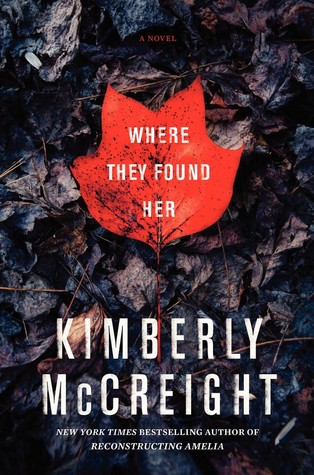
Where They Found Her. Rating: Satisfactory

“It wasn't until I'd walked up to the car at the front of the line that I heard some voices floating up from the woods. I paused, noticing for the first time that my fists were clenched.”

Connected narratives always shake me.

If everything is connected, then eventually, everything can be revealed. Find a piece of rope on the beach; give it a hard enough tug, and a ship will surface a mile out. If everything is indeed connected, and a steady eye can untangle the truth from a knot of information, then I am in an awful lot of trouble.

Fortunately, most connected narratives are fictional. In these narratives, everyone is just one or two steps removed from everyone else, and everyone drinks from the same wells of heartache and fear and joy and community.

My survival depends on the separation of spheres - for example, if the gas station attendant I pay to send my postcards turned out to be related to a certain police chief, I would be a dead woman.

As it stands, things don't always line up perfectly, and I am alive enough to read lovely books like this one.

Where They Found Her by the dextrous Kimberly McCreight


...is eminently satisfying. Protagonist Molly is assigned to report on the discovery of a dead infant, found in the woods of her small town. Like so many small-town reporters in contemporary fiction, she almost immediately becomes a de facto detective.

McCreight's characterization of a woman recovering from trauma is incredibly deft. Molly is not delicate at the time of the narrative, but she has been broken before, and is terrified of being broken again. For her, the stakes are entirely personal. An interesting narrative might feature a bomb that is about to go off, or a murderer holding a knife to the throat of his terrified victim; these are easy ways to drive the tension of a story. McCreight is far subtler than this in her characterization of Molly, who is driven by pressures that are internal but still critical. Molly is afraid of being a bad mother; she struggles with a sense of inadequacy in her career; she feels a deep need to prove that she is not going to fall back into the personal darkness that haunted her after the loss of a child. These motivations drive her believably through a complex narrative.

The story is rife with tangled layers of individual histories - everyone, it seems, is deeply connected to each other through multiple generations of trauma. This should be incredibly compelling; unfortunately, it is hindered significantly by the frequent intercession of obvious red herrings. Just as in an escape from authorities, poorly deployed distractions only serve to shine a beacon on the thing being hidden.

In Where They Found Her, McCreight's red herrings unfortunately serve to add predictability to the plot. The resolution of the primary mystery of the novel is clear within the first few chapters of the book. The secondary mystery takes slightly longer to unravel, but not by much. As a result, most of the book felt like taking a scenic route to a bolt-hole - I wanted to reach my destination, but the view was nice, so I enjoyed it in spite of my impatience.

I'll add a few additional notes here before we move on to Spoilers: McCreight is so damned good at writing characters. She writes the police who are investigating the murder of an infant with pathos, professionalism, and honesty. She writes a minor villain of the book with sympathy and understanding, and a major villain with realism and deceptive relatability. None of the characters in Where They Found Her are one-dimensional, and all of them are strongly, accurately motivated.

Now, for Spoilers.

This book is ripe for the spoiling.

For all of the predictability of the big mysteries in this novel, the final unraveling of the story blew me away. The twist - and it is a twist, reader - is set up throughout the narrative with beautiful subtlety. In a final, deadly blow to the emotions of the reader, McCreight reveals the father of the murdered infant to have been Molly's loyal, loving husband - the result of his affair with a high school student. The revelation of this fact, and the confrontation between husband and wife, made my heart leap.

I wonder, reader - was McCreight toying with us in this book? I believed that I had a firm handle on where, exactly, the book would end, and as the solutions to the many mysteries of the book were revealed, I felt deeply smug. In the revelation of the husband's infidelity, however, McCreight dealt a decisive blow, revealing herself as a worthy opponent. Although Where They Found Her presents a bumpy read at times, the ending is brilliant. Well done, Ms. McCreight.

Rating: Satisfactory. 

Possible ratings: Magnificent, Divine, Satisfactory, Tiresome, Lamentable, Execrable. This is a blog about words, what rating system did you expect?